
The Bug Hunt
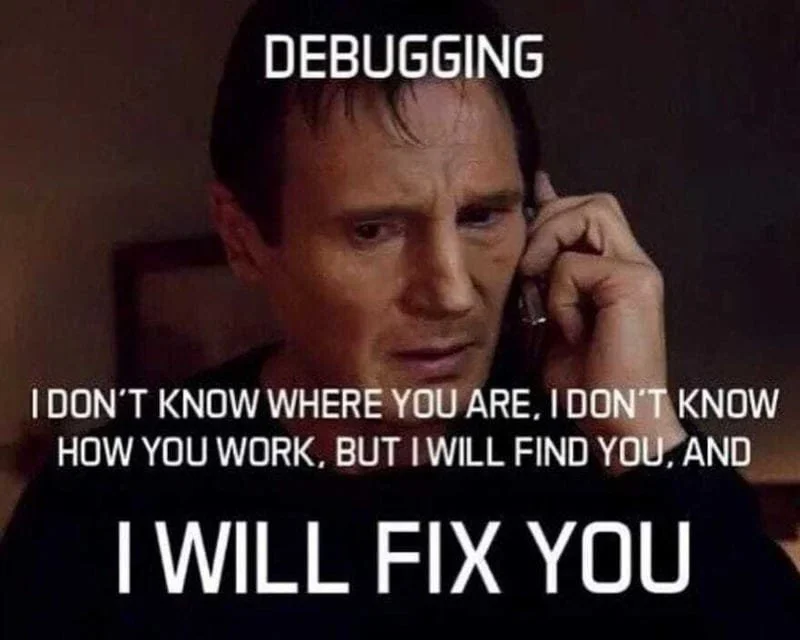
Which type of developer are you?
The software developer who simply accepts bugs as an inevitable part of life, and something that you can ignore until it becomes critical.
Alternatively, are you a developer who declares war on bugs. You cannot rest until you find the root cause, embarking on a relentless hunt through spaghetti code, cryptic error messages, and the occasional inexplicable behavior that defies all logic. For this type of developer, it’s less about fixing a bug and more about tracking a fugitive through a vast, lawless wilderness.
Debug It!
This is the reality of debugging.
In the beginning, you don’t know what the problem is precisely. You don’t know where the issue is. You can’t even reproduce it.
So, you need the right mentality. You need to know that you will find the bug. You need to know that you will fix it. This isn’t merely an exercise in technical skill, it is a battle of endurance, patience, and, most importantly, stubbornness.
We’ve all been thrown into a messy codebase, usually when starting a new job. A couple of small tickets will be pushed your way, a couple of “minor” bugfixes to work on. You’ll need to embrace the mindset of a relentless tracker. The problem is out there, lurking, mocking you with its elusive nature. The logs are your breadcrumbs, the stack traces your whispered clues. Every error message is a taunt, daring you to figure out what went wrong.
This is my biggest weakness. I dive into a new codebase convinced I won’t find the bug, rather than trusting that I will. I sometimes even tip into panic. Sure, I do eventually become able to solve the problems I’m given but it really does feel like a battle against time, and the codebase. I don’t have the right attitude, but I’d recommend that you do.
Embrace the Uncertainty
Many of the best developers learn to live with uncertainty. They accept the mystery of a bug that disappears when you add a print statement or that only manifests when the CEO is watching a demo. They shrug when an issue resolves itself, move on, and don’t take small bugs personally.
They then plug in their determination. They know the truth, that unresolved bugs don’t simply disappear. They just hide, waiting to resurface at the worst possible moment.
When you set out on the hunt you work to eliminate possibilities, rule out red herrings, and track the problem to its source. Sometimes, it takes hours of tracing through a legacy system no one dares touch. Other times, it requires reading documentation so outdated that it might as well have been written on stone tablets. And occasionally, after hours of toil, you realise the issue was caused by a single missing semicolon, a mistyped variable name, or the classic “it works on my machine” scenario.
Conclusion
Victory is never certain, but you persist. Because this is what separates a developer from a true debugger: the unwavering determination to fix what is broken. And when you finally track down the bug, when you write that final commit message. “Fixed issue” (which is, of course, a lie, because you didn’t fix that edge case). You experience the rush of satisfaction and congratulate yourself. The hunt is over. You have won.
At least, until the next one appears.