
Things Developers Say (That They Absolutely Don’t Mean)
It’s a moment in time. Coffee in hand, headphones on, and Slack pinging you repeatedly.
We’ve all been there. So, then when you squint at a mess of functions that quite frankly make no sense at all, you decide to lie to yourself. You find it easier that way and tell yourself with confidence that you’ll do the right thing.
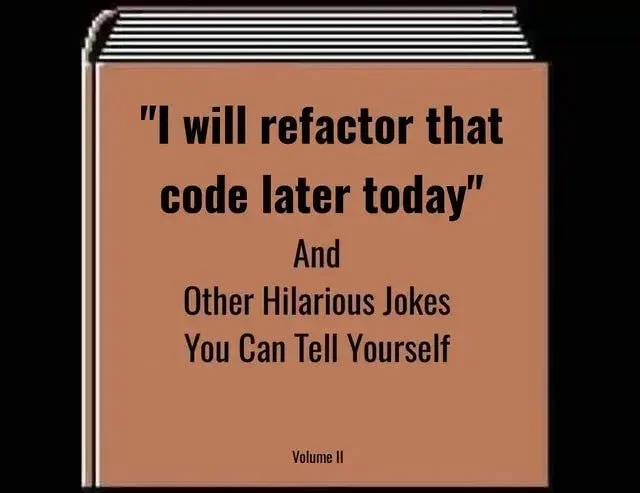
“I’ll refactor that code later today”
You know that you won’t. Which is OK, because software development is all about convincing yourself that you will eventually fix the things that need to be put back together again.
It’s not the only lie we tell ourselves (or others, in standups). There are the most common software development lies we tell, just before pushing to main.
“I’ll write tests once it’s working”
Translation: I will never write tests. This code will be protected by nothing but optimism and the vague hope that nobody notices it in coverage reports.
“I’ll document this once I understand it better”
Fun fact: you understood it perfectly when you wrote it. But documentation requires intent, grammar, and formatting — three skills that mysteriously vanish the moment your code compiles.
“This is just a temporary fix”
There is no such thing. Temporary fixes are the geological sediment of legacy systems. Every ‘quick patch’ is now a sacred pillar holding up the entire backend.
“It’s not tech debt if it ships”
Actually, that’s exactly what tech debt is. You’re just calling it a win because Jira closed the ticket. We all do it. Welcome to the club.
“I’ll clean up this branch tomorrow”
Tomorrow arrives, and your branch has diverged so hard from the main it now qualifies as a new religion. Git refuses to merge it without divine intervention. You give up and start over.
“I’ll explain this in the code review”
No, you won’t. You’ll drop a comment like “Let me know if anything is unclear!” and silently pray that nobody actually does.
“We’ll revisit this decision after MVP”
Spoiler: you won’t. The MVP becomes the final product, the duct tape becomes the architecture, and everyone agrees never to speak of it again.
“That sounds like a problem for Future Me”
Future You has joined a different team, changed their name, and left no forwarding address. You’re hoping that you’ve left the company by this time yet know in your heart you won’t have done.
Conclusion
The lies we tell ourselves aren’t just procrastination — they’re survival tools. In an industry built on shifting specs, unexpected bugs, and impossible deadlines, these small delusions let us move forward with a shred of dignity intact.
So go ahead. Tell yourself you’ll refactor that code today. We both know you won’t. But hey, you might.
And that, my fellow dev, is the biggest lie of all.