
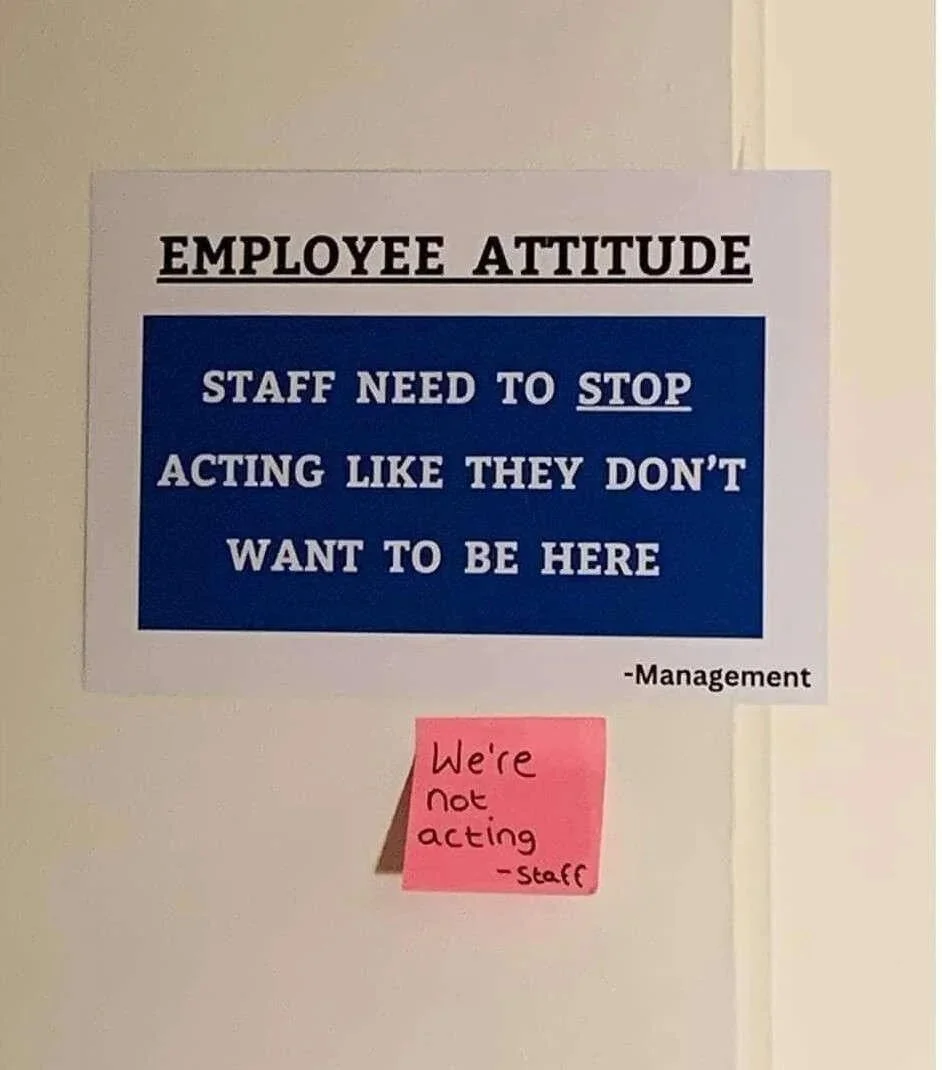
Your Employees Aren’t Acting
Ever noticed how job descriptions for software engineers love to throw around the word “passionate”?
“We’re looking for passionate engineers who love solving complex problems!”
“Join a team of passionate developers who thrive in a fast-paced environment!”
“If you’re passionate about writing high-quality, scalable code, we’d love to hear from you!”
Passion should mean that we want people who will do that little extra, who will actually be a little interested in the work. A good employee, all told.
Unfortunately, companies use “passion” as a convenient way to justify asking for more while offering less.
Why Passion Matters (To Them, Not You)
Here’s the secret. When companies say they want passionate developers, what they really mean is they want people willing to work harder for the same pay.
That means a passionate developer:
✅ Works late, without pay
✅ Doesn’t complain when a deadline is unreasonable
✅ Learns new frameworks on their own time instead of expecting training
✅ Will fix that bug at 11 PM without being on call
They do all of this because they care and don’t have boundaries.
You know who doesn’t need passion to do their job?
🔹 The executives are collecting bonuses based on your unpaid overtime
🔹 The middle managers are enforcing arbitrary deadlines
🔹 The product owners who change requirements on a whim
None of them needs to love what they do. They just need you to. Got it?
The Passion Tax
If you’re genuinely excited about coding and love working on problems, that’s great.
Here’s the thing. Passion should never be a substitute for fair pay and a sustainable work-life balance.
That’s (partly) because companies will fire you without hesitation the second it benefits them. They’re not passionate about you. What’s more, they’re not tired from working unpaid overtime.
Passion With Boundaries
It is better if those who write code love doing so. If you are interested and engaged in what you are doing, you are more likely to do a good job and find those tricky bugs without feeling like trash while doing so.
It’s good for both the software developer and the software development house. People working together to solve problems and create great software is a perfect combination. The problem is when passion is used as a tool to exploit workers. Because the truth is you can be passionate about your craft and still demand fair pay, reasonable hours, and respect.
If a company requires passion just to survive the work environment, it’s not passion they need, it’s better management.
So. the next time you see a job posting that says they want passionate engineers? Maybe ask if the passion goes both ways. Do they care about your career growth? Your well-being? Or just how much extra work they can squeeze out of you before you burn out?
Because if they only care about passion when it benefits them, maybe it’s time to stop acting like you want to be there.
Conclusion
Unfortunately, in this life, you need to think about yourself. Your employer wants a productive member of the team, just so long as they can be productive.
You may well want to be productive, and that’s a good thing. Just don’t let them abuse you in this process.