
Be Thankful That You Were There at the Beginning of AI
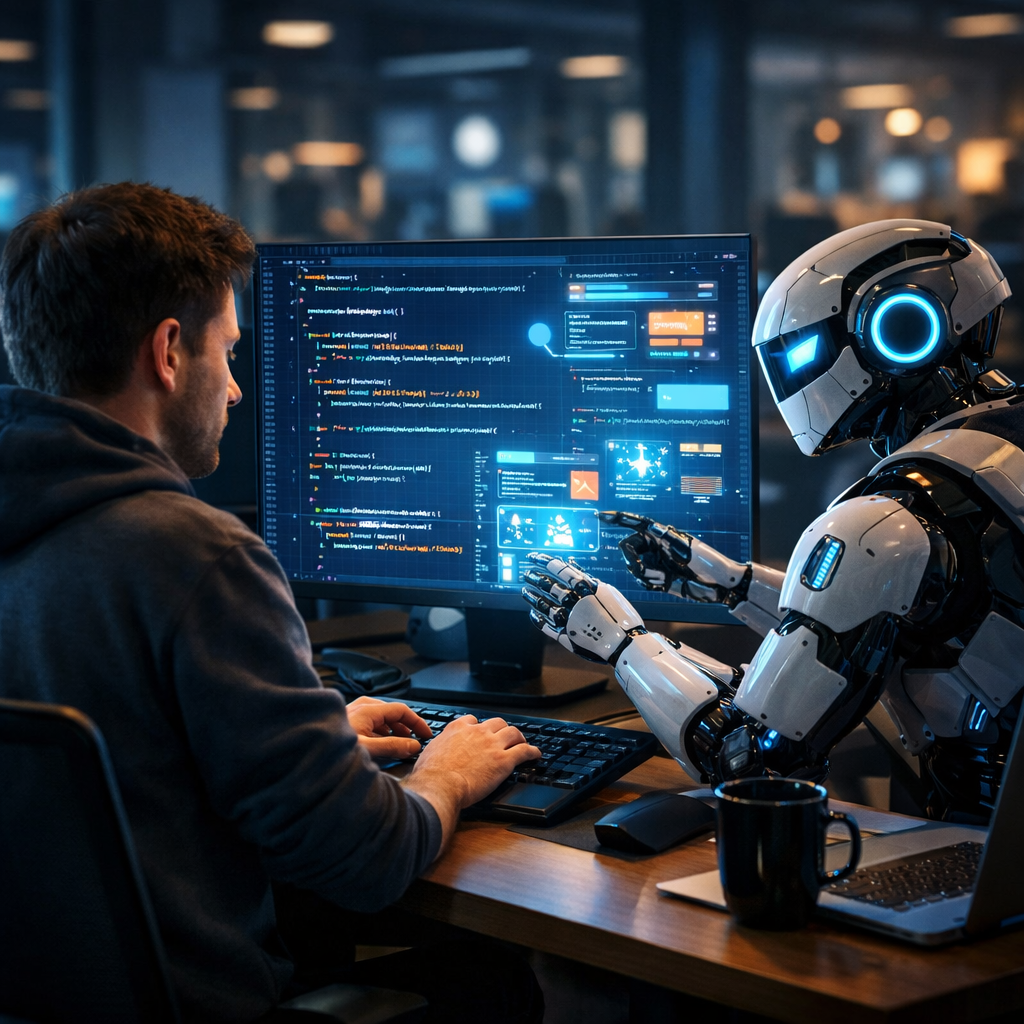
It’s happening right now. AI is changing our jobs, and I guess it is changing them for good.
Yet that’s not a problem. Not at all. That’s the greatest opportunity you’ve ever been given.
That opportunity is the time to adjust.
Before AI
If you started programming before generative AI appeared everywhere, you remember something important.
You remember what it was like without it.
You remember when:
You actually read documentation
Stack Overflow was the closest thing we had to AI
You spent two hours debugging a null pointer
A syntax error could ruin your afternoon
You remember the struggle.
That matters more than people think.
If you don’t know what the work looked like before the tools, you don’t really understand what the tools are doing for you. You don’t know how to rate those tools and think about what is happening.
AI Is a Calculator for Programming
AI can be thought of as the same to a computer scientist as calculators are to mathematicians.
Let’s run with this. When calculators became ubiquitous people claimed that students would stop learning math.
Although they were partly right (nobody is doing long division by hand these days) students are still doing math. They’re just solving bigger problems.
So let me say it. AI is doing the same thing for programming. It’s making developers more productive, and helping them to push more code in a way that isn’t trivial.
It’s a productivity shift that threatens to change an entire industry.
The Developers Who Will Survive
Jevons Paradox says that when the price for something decreases the demand for it goes up (in other words Jevons Paradox says that when something becomes cheaper or more efficient, we often use more of it rather than less.). So the demand for code (if this is correct) isn’t simply going to go away, it’s going to increase nicely and provide demand for our work well into the 2030’s and 2040’s.
The people who will thrive in the AI era are not the fastest typists, and they won’t be the people who memorize syntax.
Winners in the future are going to be those who understand
systems
architecture
tradeoffs
debugging
product design
Because whilst AI can generate code it cannot yet understand why the code should exist in the first place.
That part is still human.
For now. Appreciate there are still reasons why you’re going to count in the near term because it’s going to fill your bank balance nicely.
Be Thankful You Were There
The strange thing about being early in a technological revolution is that it doesn’t feel historic at the time. It feels like confusion, and brings on the panic to those at the coalface at the time.
It’s people arguing on Slack about the AI tools they are allowed to use. It’s managers still saying
“We don’t use AI here”
Yes. I actually heard that in an interview once.
Good luck with that strategy.
During the time of transition all bets are off.
We are in that time of transition, like it or not.
We Saw the Transition…and learned
We saw the moment programming changed. We learned how software worked before the machines themselves helped us write it.
This is like those lucky enough to go through the digital revolution. People would meet at a given time, and if your friend wasn’t there on time you’d either need to find a public phone or go home.
People were frightened of this first computing revolution, but we survived (at least those who were adaptable enough).
It’s that adaptability which is going to matter.
The next generation of developers may never know a world where AI didn’t exist. They will never have the knowledge that we do.
That means (simply) that they won’t know what to do when the AI is wrong. When that happens they’re going to need someone to help them out.
About The Author
Professional Software Developer “The Secret Developer” can be found on Twitter @TheSDeveloper and regularly publishes articles through Medium.com
The Secret Developer has never had formal training provided by a tech employer. This might explain their performance.