
Tech’s Epstein Problem
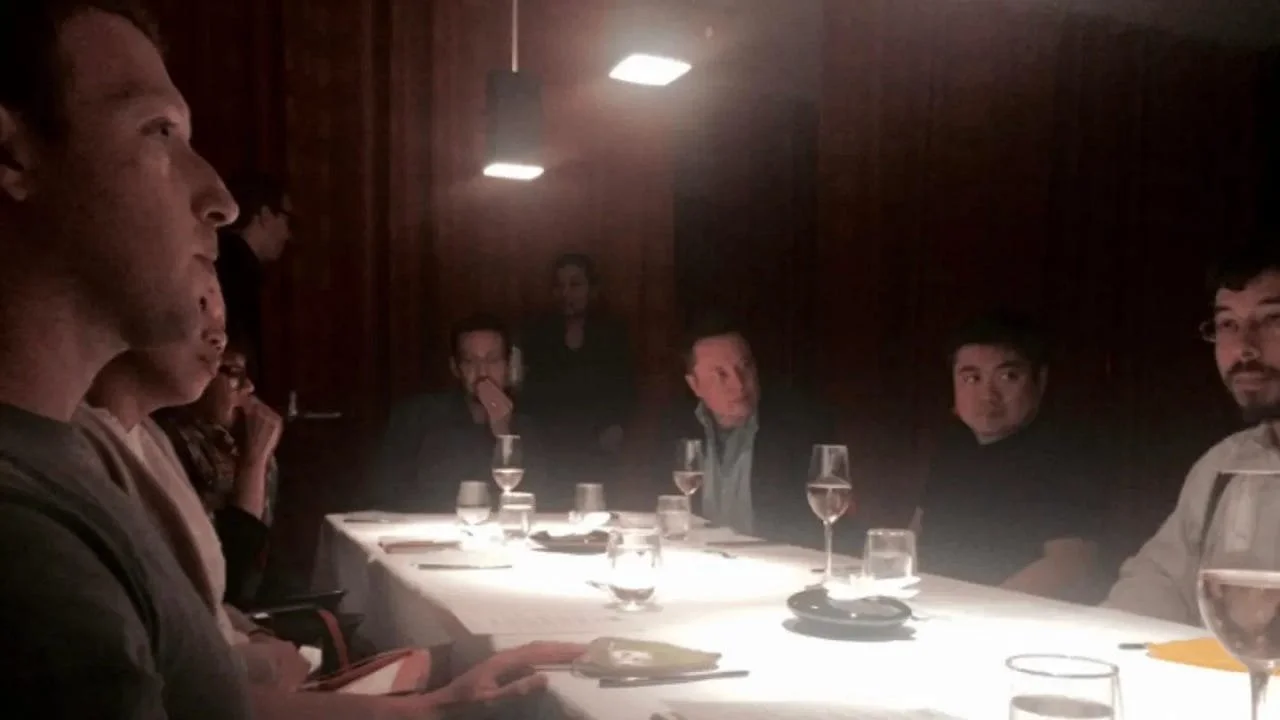
Jeffrey Epstein embedded himself in elite networks. Apparently those are tech networks as well as social networks.
The uncomfortable truth is that those networks were built on exclusivity, opacity, and mutual benefit. Whose mutual benefits? The power brokers and the billionaires (usual suspects).
They went because it benefited them, not because they “accidentally” get drawn into people trafficking.
Because that’s how that world works.
The Pattern Is the Problem
The tech industry keeps doing this over and over (again)
1. Build a founder into a messianic genius.
2. Ignore obvious red flags because “visionary.”
3. Act shocked when something ugly surfaces.
We did it with hustle culture.
We did it with unpaid overtime.
We did it with “move fast and break things.”
We even normalized sleep deprivation like it’s a badge of honor.
I don’t get why at this point Elon Musk if fated as a genius, and we all keep ignoring the rather obvious red flags around him.
The question around Musk, Zuck and the rest is this. Why would billionaire moral compromise be the line we suddenly care about?
Power Protects Power
Let’s be honest.
If you’re a junior engineer and you attend one inappropriate dinner, you’re gone.
If you’re a billionaire CEO, you get a statement drafted by legal that says:
“I met him in passing”
You get distance.
You get plausible deniability.
You get time.
I’ve worked in companies where management wouldn’t hesitate to micromanage pull requests down to line breaks — but somehow at the top of the pyramid we’re meant to believe nobody knew anything about the man hosting these elite events.
The asymmetry is staggering.
The Tech Industry Attracts Crooks
I know I’m not supposed to mention this. I shouldn’t be saying this. The Tech industry attracts crooks.
Tech? It is uniquely attractive to people who:
Want extreme power fast
Want regulatory arbitrage
Want to “disrupt” systems without being accountable to them
When you combine:
Hero worship
Weak governance
Founder control structures
Billion-dollar valuations
You create the perfect playground for morally flexible people.
We’ve already seen companies cancel entire products overnight because they weren’t revenue-positive fast enough. Short-termism on steroids.
Why would we assume ethical depth exists in a system optimized purely for valuation growth?
Pattern Recognition?
“You can’t assume guilt by association”
You know what, I think we can. Look at the people our tech CEO heroes were associating with.
But fine. I’ll accept the argument that not all of these people are automatically guilty.
But we can examine patterns.
Elite men protecting other elite men
Access traded quietly behind closed doors
Public virtue signaling, private networking
If you consistently see the same class of people orbiting corruption, eventually Occam’s Razor flips the other way.
Maybe it’s not coincidence.
Maybe it’s class behavior.
The Engineer’s Dilemma
Here’s the real tension.
We’re trying to get through sprint planning without wasting 2.5 hours of our lives.
We’re arguing about code review nitpicks.
We’re worried about layoffs.
And then we look up and realize the industry’s most powerful figures keep showing up in ethically radioactive environments.
It creates cognitive dissonance.
You want to believe you’re building useful tools. Changing the world.
But when it’s clear that power attracts predators it’s also clear that we are working for a bunch of crooks.
People don’t speak up. They want to get paid. They want to go home to their families. Software developers aren’t able to challenge founders, obviously. It’s a bad situation all round.
So Are They Crooks?
Here’s my take.
I don’t know what happened at that dinner.
But I know this:
Billionaires do not operate accidentally.
Elite networks are not random.
Access is currency.
Reputation laundering is real.
And when you repeatedly see powerful people adjacent to corruption, you don’t owe them blind trust.
Trust is earned.
Transparency is earned.
And in tech, we hand both out like stock options.
Maybe that’s the real scandal.
About The Author
Professional Software Developer “The Secret Developer” can be found on Twitter @TheSDeveloper and regularly publishes articles through Medium.com
The Secret Developer can’t write a funny comment about such a bleak, bleak topic.