
The Necessary Evil of Modern Software Development
I’ve got some news for you. Working as a software developer is still hard. You knew that already though didn’t you, you software-developer readership you.
Coding still isn’t the hardest part of the job.
You already know what it is. Say it out loud.
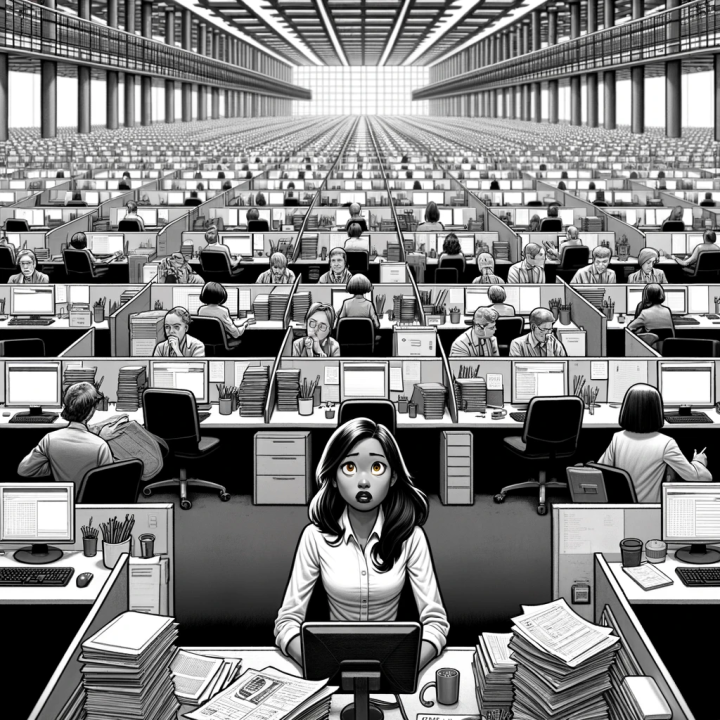
It’s the Kafkaesque nightmare where simple requests become epic sagas, and trivial changes require written justification, peer review, approval, and a blessing from someone who no longer remembers why the rule exists.
It’s JIRA.
Welcome to the Jungle
JIRA is the undisputed champion of making things harder than they need to be. Marketed as a tool for collaboration, visibility, and delivery, it promises order and control
What it reliably delivers instead is bureaucracy and despair.
Let’s say you want to log a bug. Not fix it yet. Just log it.
Here’s what that looks like:
Select from 37 different ticket types. Is this a bug? A task? A sub-task of a task that was never properly defined? Nobody knows. Nobody has ever known.
Decide which epic it belongs to. Is it payments or subscriptions? It’s both, so it’s neither. Just choose one, and then get roasted at stand up.
Assign it to a sprint that doesn’t exist yet, or add it to the current sprint on the last day and get flagged for “scope creep”. Or just do the work in advance of the sprint, and “magically” do it on Monday.
Wait for a JIRA admin (who inevitably is in a different time zone) to grant permissions that you must have previously held.
Get blocked by a workflow rule nobody understands and nobody feels responsible for. Desperately try to make somebody (anybody) take responsibility for it.
It’s like government paperwork, except there’s no government. Just a self-organizing team pretending there is any locus of control at all.
The System Nobody Wanted
Not the 3DO, no. It’s JIRA (the topic of this article). Now since JIRA is often sold as the tool for Agile teams you’d think it would be half-decent. It isn’t.
It radiates the energy of a waterfall to such an extent you feel like you might get wet.
It enforces nonsensical management burden, calling them statuses, gates, approvals and implements reporting structures you wish you’d never dreamt of. The management game becomes as time-consuming as writing code, but without the relief that comes when you’ve solved a problem.
I think I’ve figured this one out though.The fact is that JIRA doesn’t help build software. It helps managers generate reports about software development, and report up the chain.
Software development and reporting are two entirely different things.
Modern Development
Here’s the absurd part of development in 2026.
We now live in a world where developers can
Generate boilerplate code in seconds
Spin up environments instantly
Auto-generate tests and documentation
Ship faster than ever before
Yet somehow, moving a ticket from “In Progress” to “Done” still requires
Multiple approvals
And a comment explaining why the thing you’ve marked as finished is in fact finished
We can automate the work, but not the workflow.
Progress is fast. Permission is slow.
A Personal Timeline of Despair
For anyone working with JIRA their emotional rollercoaster encompasses the kind of flow below.
Week 1
“Okay, this seems kind of useful”
Week 2
“Why do I need three approvals to update a field?”
Week 3
“Why is the backlog a graveyard of forgotten ideas?”
Week 4
“Why is my simple bug fix now a six-step process?”
Week 5
“Has anyone actually finished a ticket?”
Week 6
“I hate this more than I hate my own code”
Eventually, you lose the ability to tell whether your job is software development or full-time ticket navigation. The truth? You’re a full-time software developer and a full-time ticket jockey, like the rest of us.
The Real Result
I’m going to put this out there. JIRA is so bad that it causes pivots in whole careers.
Ever wonder why so many engineers “suddenly” pivot into consulting, DevRel, or indie work? It’s not just about escaping bad codebases or corporate nonsense.
It’s about escaping JIRA and the toxic workflows that it owns.
Software developers like to *gasp* build things. They want to write code, test it, ship it, and move on. No status ceremonies about the status of statuses. No existential dread triggered by dropdown menus. That’s the dream that JIRA is blocking. It simply won’t happen when the whole system is set up in such a way as to ensure that you won’t be able to get your work done in good time.
Conclusion
It shouldn’t surprise anyone that JIRA has taken over the world. Product owners and engineering managers love it, so everyone else has to use it because it helps them out with their goals.
It always surprises me that they’re in position to help support developers yet in practice do nothing of the kind.
Because remember the problems JIRA brings when you’re told there’s no budget for a developer tool which will save hours of time and effort. Because there’s always budget for moving tickets from left to right.
About The Author
Professional Software Developer “The Secret Developer” can be found on Twitter @TheSDeveloper and regularly publishes articles through Medium.com
The Secret Developer secretly loves JIRA, as moving tickets from left to right is a beautiful proxy for the real work they avoid like the pro that they are.